

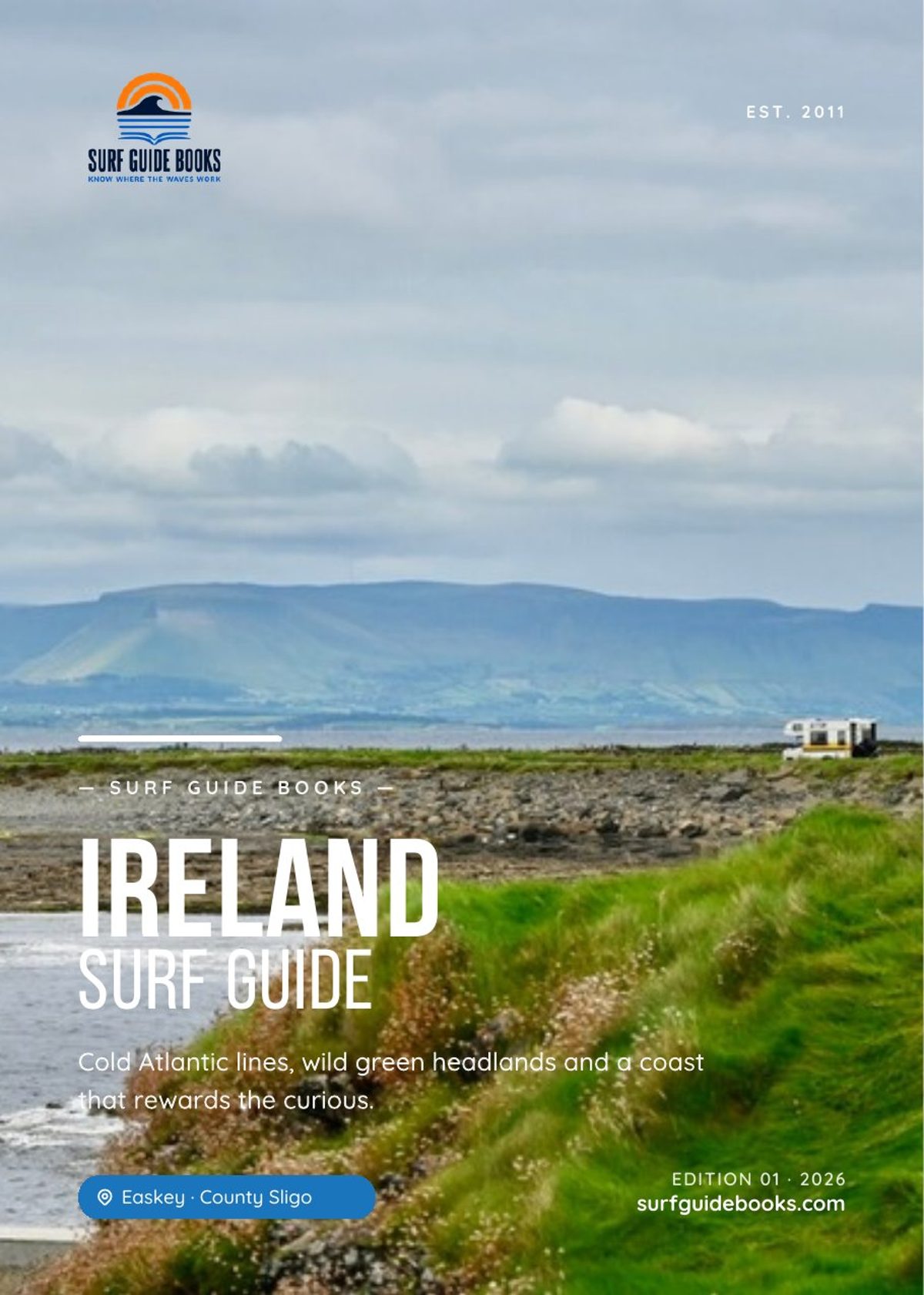
Ireland Surf Guide
In short: the Ireland Surf Guide helps surfers know the best surf spots on Ireland's coast, from Kerry and West Cork to Clare, Sligo, Donegal and the Causeway Coast, when those spots work and which waves fit their level.
Ireland is rawer, quieter and less predictable than the classic surf coasts of France, Spain and Portugal. Open beaches, sheltered bays and serious reefs sit within a few hours' drive of each other. The guide is built for a flexible roadtrip: honest spot character, wind and swell windows, wetsuit advice and clear limits for expert-only waves.
Surfing in Ireland at a glance
| Regions | Kerry & West Cork, County Clare, County Sligo, Donegal, Northern Ireland, South & East Coast |
|---|---|
| Best months | September to November on the whole west coast; Sligo and Donegal stay consistent until April |
| Water temperature | About 8–16 °C, depending on region and month |
| Wetsuit | 4/3 mm in late summer and early autumn; 5/4 mm with boots (often gloves and hood) from late autumn to spring |
| Level | All levels on the right beach with a school; many reefs are advanced only |
| Main swell | W–NW Atlantic groundswell on the west coast; S–SW on the south coast; N–NW on the Causeway Coast |
| Trip length | Routes for 7, 10 and 14 days |
| Format | Guidebook, Edition 01 (2026) · in production |
Where are the best surf spots in Ireland?
The guide follows six regions from south to north. Each region opens with a map, numbered spot pages and ideas for when it is flat.
Kerry & West Cork
Long beaches and changing wind angles. Brandon Bay, Inch Beach beneath the mountains and the exposed Dingle Peninsula, plus West Cork beaches such as Inchydoney and Garretstown.
County Clare
The accessible heart of the west coast. Lahinch is the practical surf base, Fanore sits beneath The Burren and Spanish Point mixes sand with more serious rocky sections.
County Sligo
Surf-town energy and powerful reefs. Strandhill is the social base, Streedagh offers shelter, Easkey is for confident reef surfers and Mullaghmore Head is a big-wave spectacle to watch from land.
Donegal
Consistent beaches and expert icons. Bundoran is the main base, Tullan Strand catches almost every ripple and Rossnowlagh is a generally softer option for lessons and families.
Northern Ireland
The Causeway Coast around Portrush and Whiterocks, with a calmer learner beach and a stronger, more exposed option in town.
South & East Coast
Tramore, Bunmahon and Curracloe add alternative swell windows and easier family bases, ideal as a return-leg extension.
When is the best time to surf in Ireland?
Autumn is the sweet spot. From September to November Atlantic groundswell is consistent, the water is still relatively warm and the summer crowds are gone. Kerry and Clare are at their best in this window. Sligo and Donegal keep working through winter until April, but that means colder water, shorter days and more wind.
Summer is smaller and more suited to lessons and longboards. The south coast and especially the east coast need rarer swell directions and can stay flat for days, then switch on during a storm.
Which Irish surf spots fit your level?
Ireland has accessible beaches and some of Europe's most demanding reefs, often within the same bay. The guide uses a colour-coded skill badge on every spot page.
Beginners
Lahinch, Tramore and Curracloe have established schools and equipment hire. On small, clean days Fanore, Rossnowlagh and Inchydoney can also work with a lesson.
Intermediates
Strandhill, Tullan Strand, Bundoran Main, Long Strand and Whiterocks reward surfers who can read currents and pick a working sandbank.
Advanced
Easkey Left and Right, The Peak in Bundoran and Coumeenoole demand proven reef experience, a clear exit plan and respect for the local line-up.
What does a spot page look like?
Two spots, two very different waves. Every page follows the same compact system, so you see in seconds who a wave suits and when it works.
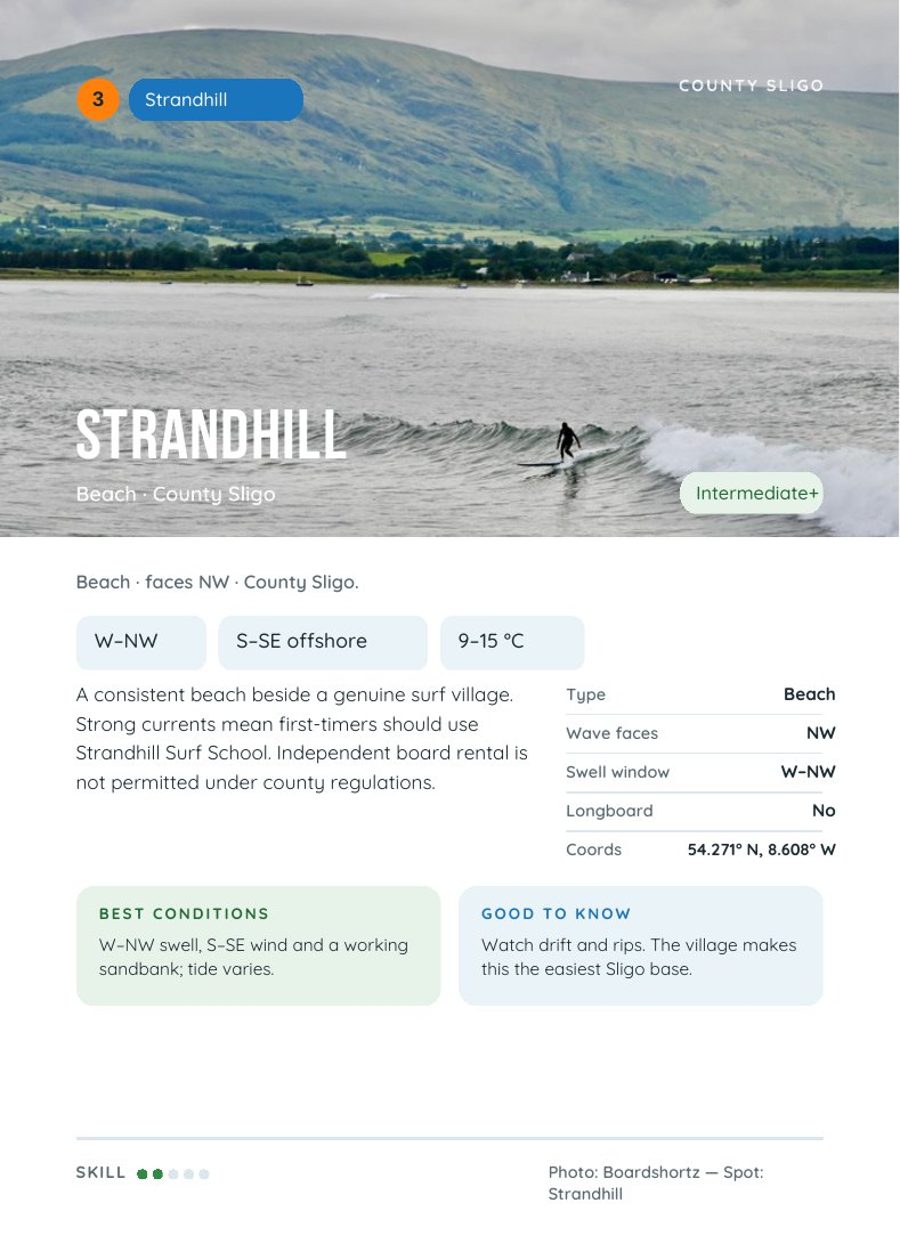
Strandhill
Intermediate+A consistent beach beside a real surf village, with strong currents. First-timers go with the local surf school.
- Swell W–NW
- Wind S–SE
- Beach
- 9–15 °C
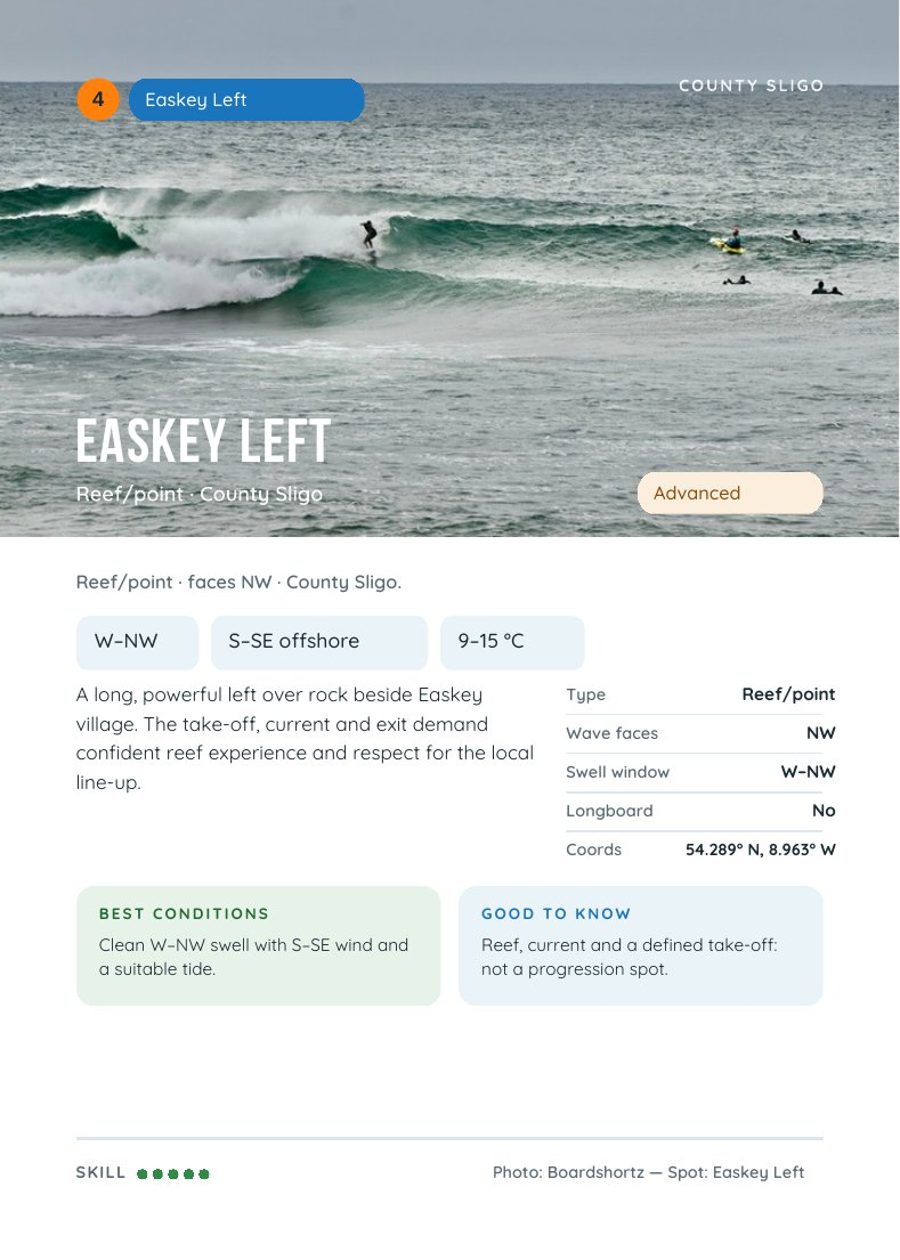
Easkey Left
AdvancedA long, powerful left over rock beside Easkey village. Take-off, current and exit demand confident reef experience.
- Swell W–NW
- Wind S–SE
- Reef/point
- 9–15 °C
- Spot pillName and number, matching the region map
- Skill badgeFrom mellow beginner sand to expert-only reef
- Condition chipsSwell direction, grooming wind and water temperature
- Spec tableBreak type, swell window, longboard and coordinates
Early preview of Edition 01. The final layout may still change.
What will the Ireland Surf Guide include?
Why an Ireland surf guide?
The Ireland Surf Guide is written by Jurjen van den Broek, surf travel writer for Boardshortz.nl for more than 15 years and founder of Surf-Escape.com. It follows the same approach as the Surf Guide for South West France: practical, honest about hazards and built around real trips.
Questions about surfing in Ireland
When will the Ireland Surf Guide be available?
The Ireland Surf Guide is currently in production as Edition 01 for 2026. Join The Surf Guide Alert to get one short email when the guide is available.
Which regions does the Ireland Surf Guide cover?
Six regions: Kerry and West Cork, County Clare, County Sligo, Donegal, Northern Ireland (the Causeway Coast) and the South and East Coast.
What is the best time to surf in Ireland?
September to November is the most reliable window on most of the west coast, with Kerry and Clare at their best in autumn. Sligo and Donegal stay consistent from September to April. Summer is smaller and better suited to learners.
Is Ireland a good surf destination for beginners?
Yes, if you choose the right beach and use a surf school. Lahinch, Tramore and Curracloe have established schools and gentler sandbanks on small days. Many Irish reefs, such as Easkey and The Peak in Bundoran, are for advanced surfers only.
What wetsuit do you need to surf in Ireland?
Water temperatures range from about 8 to 16 °C. A 4/3 mm wetsuit works in late summer and early autumn; from late autumn to spring most surfers wear a 5/4 mm with boots, and often gloves and a hood.
Can you surf Mullaghmore Head?
No, not as a recreational surfer. Mullaghmore Head is a big-wave reef for professional tow-in teams with jet ski and rescue cover. The guide treats it as a spectator feature; Mullaghmore Strand nearby is the accessible beach option.
Planning a surf trip before Ireland is out?
The Surf Guide for South West France is available now as a digital PDF and printed guide, with 35+ surf spots from the Vendée to the Basque Country.